 Overview
 Leadership
 CSR
CSR Equal Steps
 ESG
ESG News Room
 Investor Relations
 ISO Certification
 Broking Services
 Depository Services
 Mutual Fund
 Research Analysis
 Margin Trading Facility
 Portfolio Management Services
 IPO
IPO Fixed-Income & Structured Instruments
 VWAP
VWAP FII & DII Indicator
 Calculators
 Margin Calculator
 Dividend Yield Calculator
 Options Calculator
 CAGR Calculator
 Trade Cost Calculator
 PMS Calculator
 Trading Platform
 Trading Brokerage
 Demat Account Charges
 Other Trading Charges
 Authorised Person
 Business Partner
 Independent Financial Distributor
Can IPOs Really Make You Quick Profits? Here’s the Truth
IPO or Initial Public Offering refers to public offering, which includes selling of shares of a company/firm to the institutional investors and the IPOs are typically offered to retail investors as well. Usually, one or more investment banks underwrite an IPO and make arrangements for the shares to be listed on one or more stock […]

Authorised Person of Stock Exchange: Role, Eligibility Criteria, and Compliance
The Indian capital market has witnessed significant growth over the years, with increasing participation from retail and institutional investors. To expand their reach and provide better access to trading services, stock brokers appoint intermediaries known as Authorised Persons. Authorised Persons play an important role in connecting investors with registered stock brokers and facilitating participation in […]

AI Trading Platforms vs Traditional Stock Brokers: How the Investor Experience Is Shifting in India
For a long time, investing has been a structured process. You opened an account, followed market updates, researched, and placed trades when you felt ready. The broker acted as the bridge between you and the market. That structure still exists, but the way investors experience markets is changing. The change is not only about technology. […]

How AI Trading Software Is Changing the Way Retail Investors Trade in India
A retail investor trades with three things: time, attention, and money. Money is obvious. Time and attention are the hidden costs. You can have a good plan and still trade badly if your attention is pulled in ten directions. AI trading software is changing this part of trading. It does not “predict” the market. It […]

Full Service Broker Vs Discount Broker: A Comprehensive Comparison Guide
Most people think the first step in investing is choosing what to buy. In reality, the first real decision happens earlier. It is choosing who handles your access to the market. That choice shapes everything that follows. The tools you see. The costs you pay. The kind of information that reaches you. Even the way […]
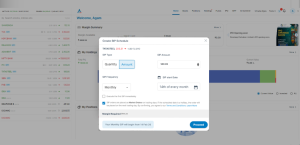
What Is Stock SIP on Share India?
A Complete Guide to Systematic Investment Plan in Stocks Timing the stock market consistently is challenging — even for experienced investors. Market volatility, emotional decision-making, and irregular investing often prevent long-term wealth creation. This is where Stock SIP (Systematic Investment Plan in Stocks) on Share India offers a structured and disciplined approach. Share India’s Stock […]
How to Apply for an IPO Online Through Share India: Step-by-Step Guide
Initial Public Offerings (IPOs) allow investors to participate in the equity markets by investing in companies at the time they are first listed on a recognised stock exchange. In India, IPO applications are governed by SEBI regulations and processed through a structured and transparent mechanism. Share India facilitates online IPO applications through its mobile application […]
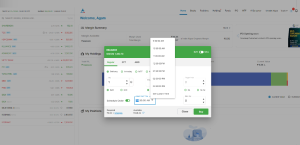
Understanding the Schedule Order Feature on Share India
Timing plays a crucial role in stock market trading, especially during market opening hours or periods of rapid price movement. However, it is not always possible for investors to monitor the market continuously. To make trading more convenient, Share India offers the Schedule Order feature. This feature allows investors to place a buy or sell […]

Tips For Choosing Best Stock Broker
Preface Entering the stock market is an empowering step toward financial independence, but choosing the right stockbroker can be challenging—especially with the increasing number of platforms, tools, and investment options available today. A well-chosen broker does more than execute trades; it provides technology, insights, security, and long-term value. This guide outlines the essential factors every […]

No-Code Algo Trading: Build Multi-Leg Strategies Without Any Coding on Share India
The financial markets, with their inherent volatility and intricate price movements, have long presented both opportunities and challenges for investors. The advent of algorithmic trading marked a significant turning point, offering a systematic and automated approach to navigating these complexities. By employing computer programs to execute trades based on pre-defined rules and parameters, algo trading […]

How Pre-Built Algo Strategies Help You Trade Smarter with Share India’s Algo Tool
In today’s dynamic financial markets, savvy traders are constantly on the lookout for tools that offer an edge. Algorithmic trading, traditionally seen as complex and reserved for institutional players, has become increasingly accessible. Share India’s Algo Tool is revolutionising this access by providing a powerful suite of pre-built algo strategies. These strategies offer a straightforward […]

Step-by-Step Guide to Using Share India’s Online Calculators for Better Trades
Share India offers a suite of intuitive online calculators designed to empower you with valuable insights before, during, and after your trades. These tools help you understand various aspects of your trading activities, from potential costs to performance analysis, fostering a more strategic approach to the market. This guide will walk you through each of […]